Before
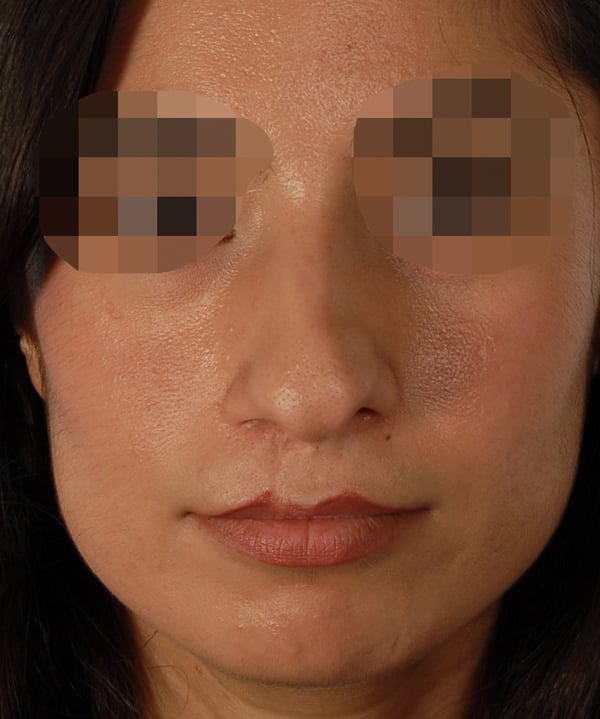
After
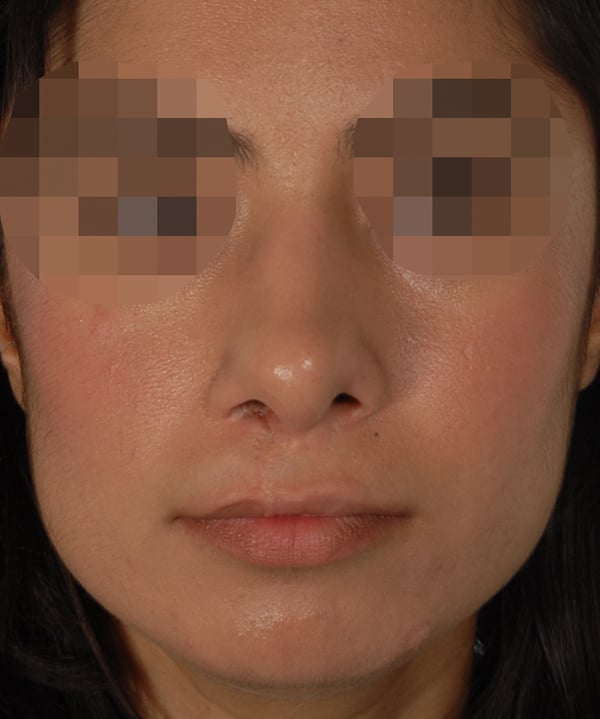
Rhinoplasty Before & After Photos
View Rhinoplasty Before and After Photos
performed by Dr. Baker in Washington DC.

Rhinoplasty reshapes your nose to improve balance, breathing, or both, enhancing your appearance and overall well-being. If you are considering a nose job in Washington, D.C., Dr. Stephen B. Baker provides clear guidance, advanced planning tools, and results focused on your goals.
Before
After
View Rhinoplasty Before and After Photos
performed by Dr. Baker in Washington DC.
Rhinoplasty is the medical term for a surgical procedure on the nose. It is performed to help you breathe, improve appearance, or both, and is done in a hospital or outpatient surgery center under general anesthesia.
Primary rhinoplasty is the term used to describe a rhinoplasty on a nose that has not undergone previous surgery.
Revision rhinoplasty is a rhinoplasty that is performed on a nose that has already undergone one or more nasal surgeries. Secondary rhinoplasty refers to a second nasal surgery, and tertiary rhinoplasty is done on a nose that has had two previous nasal surgeries.
Revision rhinoplasties may be more difficult due to scar tissue from prior surgeries. It may require the use of cartilage grafts that are harvested from the nasal septum, ear cartilage, or even rib cartilage.
Functional rhinoplasty is a nasal surgery that is performed with the sole purpose of improving nasal airflow. Common procedures with functional benefits are septoplasty, spreader grafts, and turbinate reduction. Minimal, if any, changes in nasal form are seen after a purely functional rhinoplasty.
Reconstructive rhinoplasty is the term used to describe a rhinoplasty that is designed to bring a nose back to its original form after trauma, a congenital anomaly, or a tumor. The patient has a nasal anomaly that requires correction to restore the nose to its normal form.
In a reconstructive rhinoplasty, both functional and visual improvements are frequently made. A reconstructive rhinoplasty does not change the nasal form from the original pre-injury form; its purpose is to return the nose to its original form. A thick nasal tip or dorsal bump that was present before the injury will not be addressed in a purely reconstructive rhinoplasty.
Cosmetic rhinoplasty is designed to change the shape of the patient’s nose to the desired ideal. The patient visualizes their current nasal shape and Dr. Baker uses 3D images of their nose to define their aesthetic ideal nose. Dr. Baker will help each patient clearly identify their desired changes and make sure the patient has realistic expectations.
Open rhinoplasty is defined as a rhinoplasty in which an incision is made across the columella to expose the nose. The scar across the columella is so subtle that it can be hard to identify even under direct light and loupe magnification during a secondary rhinoplasty.
An open approach provides the surgeon with much better exposure and greater accuracy in performing the surgical steps to achieve the final result. For this reason that most well-known rhinoplasty surgeons prefer the open technique.
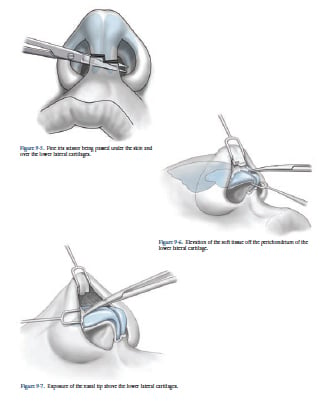
A closed rhinoplasty is performed with all of the incisions on the inside of the nose. It is a good approach for noses that require less sophisticated maneuvers to achieve the patient’s desired result. The limitations of intraoperative visibility make it more difficult to directly and accurately shape the cartilage and place precise positioning sutures.
Approximately 25% of the new rhinoplasty patients who see Dr. Baker present for secondary or revision surgery, and in Dr. Baker’s experience, a high percentage of these patients had their prior surgery performed through a closed approach.
Non-surgical rhinoplasty is performed by injecting filler into the nose. It may achieve the desired result without the need for surgery by using a dermal filler such as Juvederm or Restylane to create the desired contour. When indicated, it is done in the office with minimal recovery time.
A potential complication is accidentally injecting filler into a blood vessel, which can cause tissue necrosis and skin injury. Blindness has also been reported in rare cases. For this reason, Dr. Baker recommends seeing an injector who also performs surgical rhinoplasty and understands the nasal vascular anatomy to help reduce this risk.
You may be a good candidate for rhinoplasty if you:
During your consultation, Dr. Baker takes time to understand your goals and examine your nasal structure. Predictive 3D imaging enables you to review potential changes and visualize how adjustments may appear on your face. You are encouraged to ask questions and take an active role in defining the features you want. If a goal is not advisable or realistic, Dr. Baker will explain why and guide you toward safe, appropriate options.
Once you agree on the plan, Dr. Baker reviews the procedure steps using his Rhinoplasty textbook, which outlines nasal anatomy and the techniques used during surgery. You may also review before-and-after images from other patients.
Because rhinoplasty is a detailed procedure that affects facial balance, Dr. Baker usually recommends at least two visits before surgery to ensure your expectations, goals, and understanding of risks are clear.
Before performing the surgery, Dr. Baker requires that you can identify your goals, understand the procedure, and have realistic expectations. In his experience, a well-prepared patient will do much better postoperatively, leading to a positive experience. In fact, Dr. Baker is well-published in studies evaluating patient-reported outcome measures in rhinoplasty and was awarded the best presentation award at the national Rhinoplasty Society for his work in this area.
Classic ideal proportions of the nasal form have been described and are a valuable guide for achieving a successful result. However, not every patient wants a nose that fits the criteria for the classic ideal. Typically, there is a range of results that are aesthetic but may slightly deviate from the classic “ideal nose.” Using 3D imaging, Dr. Baker will help you determine what nasal changes will result in a nose that you, as a patient, feel is a beautiful nose.
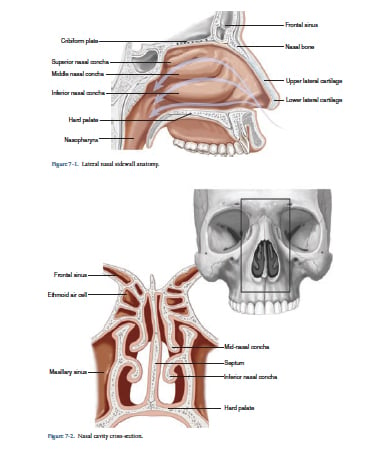
The image below shows the major components of nasal anatomy that are modified in rhinoplasty.
The upper portion of the nose is made of nasal bones. The middle third of the nose is comprised of the dorsal nasal septum in the middle and the paired upper lateral cartilages. The lower third of the nose, the nasal tip, is formed from two paired lower lateral cartilages. Finally, the columella, the tissue that divides the nostrils, is made of the medial continuation of the lower lateral cartilages called the medial and middle columellar cartilages.
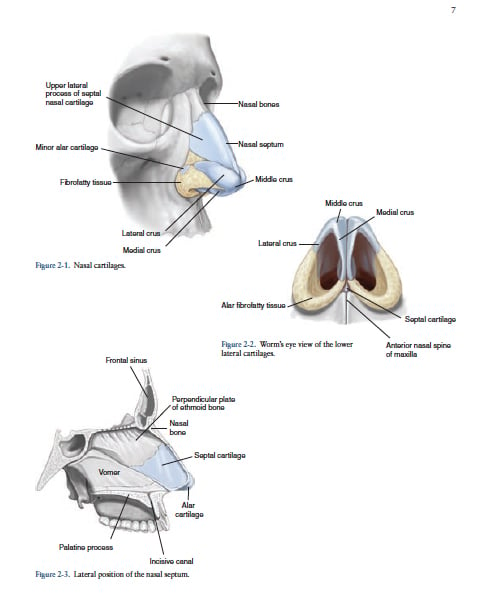
Images courtesy of Rhinoplasty. Taub PJ, Baker SB. McGraw Hill
An elevated dorsum is usually caused by excess height in the nasal bones and dorsal septal cartilage. This height is reduced in small steps using an osteotome and a rasp. After lowering the bridge, the nose may appear wider; therefore, additional shaping may be necessary to restore proper balance.
A low nasal dorsum can be raised through a variety of techniques. The simplest and least skill-intensive is the use of an implant. There are many reasons Dr. Baker does not recommend this approach (see FAQs). Experienced rhinoplasty surgeons almost always prefer the use of autologous tissue (the use of your own bone or cartilage).
The preferred technique among the most experienced rhinoplasty surgeons is the use of diced cartilage. This allows precise elevation and sculpting of the dorsal nasal contour, resulting in a natural feel and appearance. The bone may be used, but may resorb and feel stiff. The cartilage necessary is typically harvested from your nasal septum, ear, or rib, depending on the amount required to achieve the desired result.
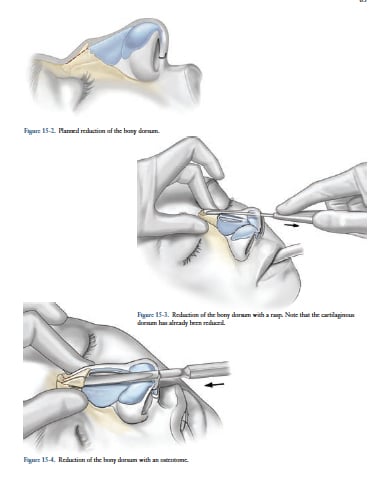
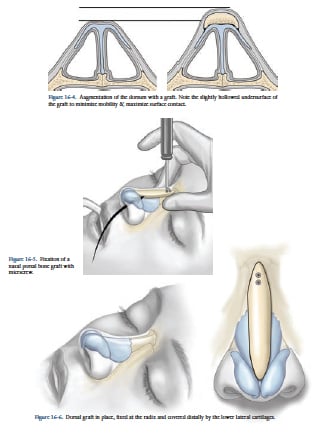
Images courtesy of Rhinoplasty. Taub PJ, Baker SB. McGraw Hill
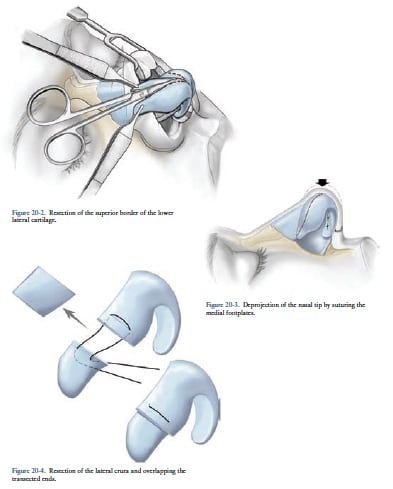
A bulbous or ill-defined nasal tip is usually the result of broad and large lower lateral cartilages. These are paired cartilage structures that form the nasal tip and contribute to the tip’s definition, symmetry, and size. By removing excess cartilage and using sutures to narrow the tip, Dr. Baker can create a more defined tip. Occasionally, a cartilage graft, called a tip graft, is added to further define the tip.
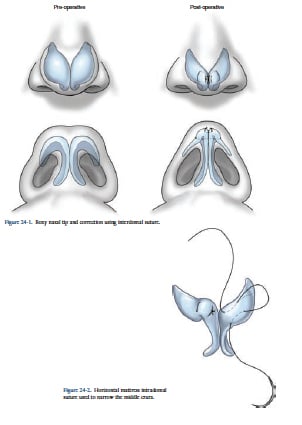
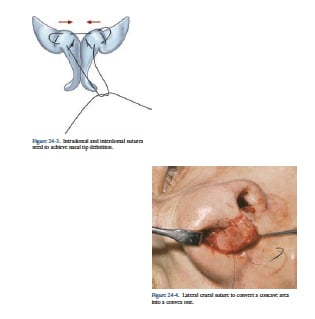
Images courtesy of Rhinoplasty. Taub PJ, Baker SB. McGraw Hill
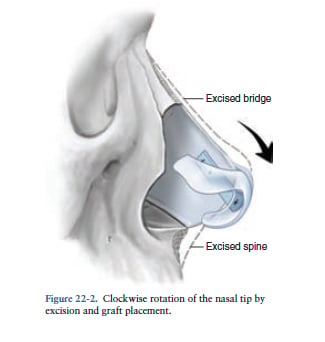
Increasing tip rotation is an easy maneuver that is usually done using sutures to elevate and rotate the tip to the desired position.
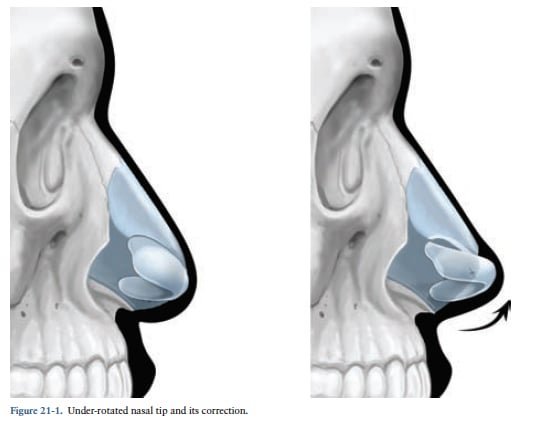
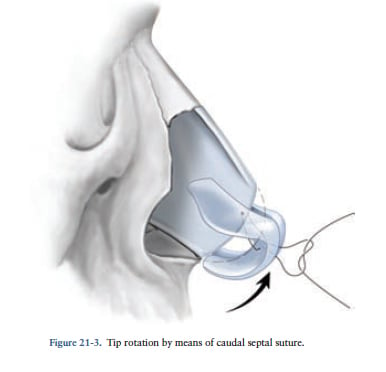
Decreasing tip rotation is usually performed by using a cartilage graft to serve as an anchor to which the tip can be sutured in its desired position.
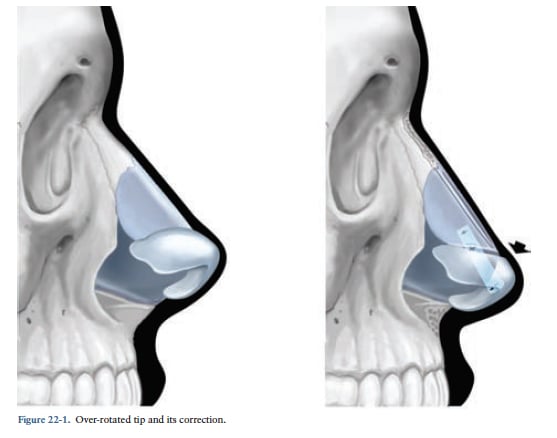
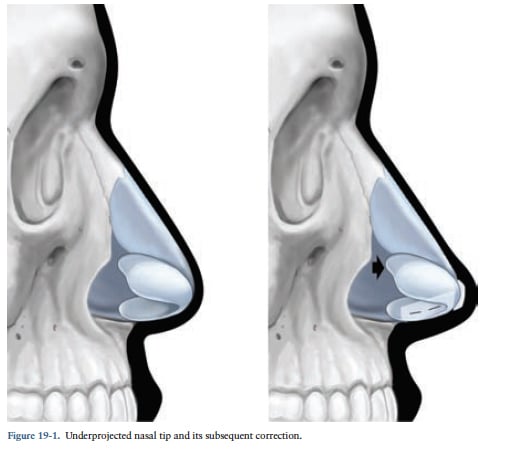
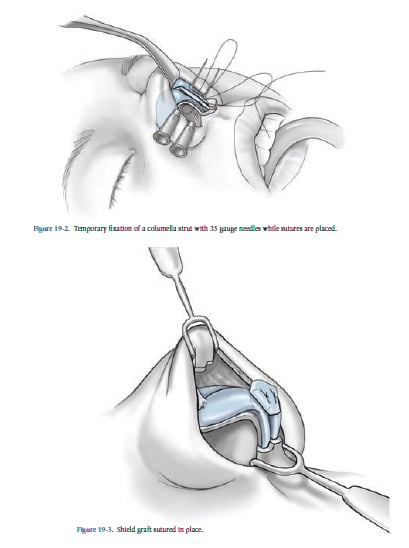
Increasing the projection of the nasal tip can be achieved through various methods. Sutures may be used to achieve a modest increase in nasal tip projection. Alternatively, a tip cartilage graft may be used to add tip projection and definition. For a more pronounced increase in tip projection, cartilage grafts can be used to move the entire tip (both lower lateral cartilages) forward.
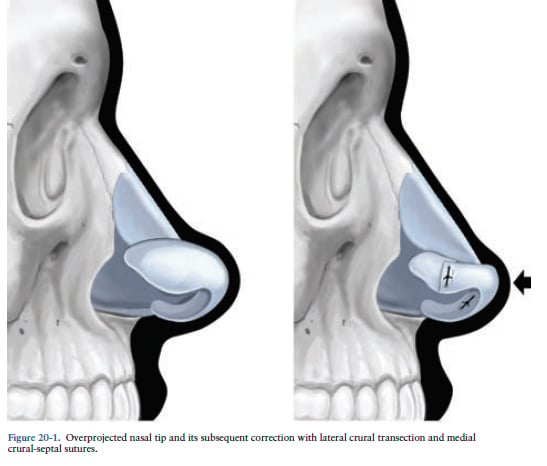
Decreasing excessive nasal tip projection is a challenging maneuver. As cartilaginous support is being reduced, redundant skin needs to contract around the new nasal cartilaginous support.
For minor decreases in tip projection, the nasal tip can be mobilized and sutured in a more posterior position. Further deprojection can be achieved by removing some of the nasal columella cartilage. For the most powerful deprojection, cartilage is removed at the lateral edges, the central portion of the lower lateral cartilages, and the tip may be reduced and then covered with a nasal tip graft.
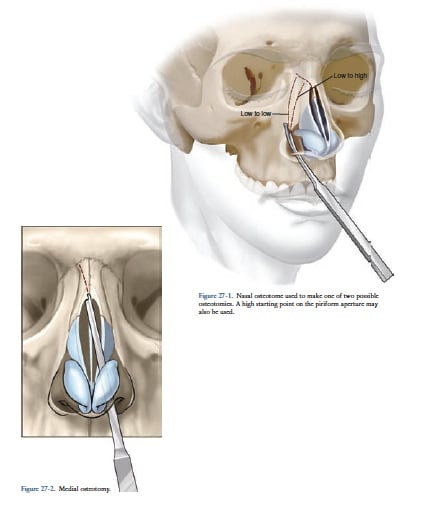
Narrowing the nose is performed in several steps. The tip is narrowed using the techniques described above in Tip Definition. The nasal bones are narrowed by carefully mobilizing the bones, allowing them to be moved into the desired position, a procedure known as an osteotomy (see right).
Images courtesy of Rhinoplasty. Taub PJ, Baker SB. McGraw Hill
Correcting nasal asymmetry is a challenging endeavor. Typically, multiple areas of the nose require modification to straighten a crooked nose.
The septum is usually corrected with a septoplasty. Occasionally, an intraoral incision must be made to access the septum and center it on the face. The nasal bones are often mobilized with osteotomies. Tip symmetry is usually corrected with sutures but may require a cartilage graft. Other cartilage grafts are frequently used to reinforce the nasal structure, maintain symmetry, and control external forces on the nose.
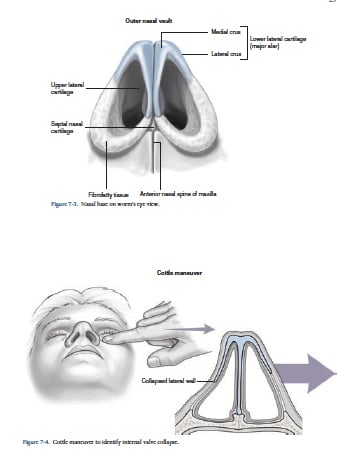
A breathing assessment includes a visual exam and a test called the Cottle maneuver. This maneuver is performed by blocking one nostril and having you breathe while the other nostril is gently pulled outward. If breathing improves, it suggests narrowing of the internal nasal valves. The valve angle is the space between the septum and the lateral nasal wall, and opening it during the test works much like a nasal breathing strip.
If a deviated septum or valve collapse is present, treatment may include spreader grafts or septoplasty. A deviated septum can be seen during examination and may also be confirmed with a CT scan.
Images courtesy of Rhinoplasty. Taub PJ, Baker SB. McGraw Hill
A septoplasty is performed to remove a deviated portion of the nasal septum that is contributing to nasal breathing problems. Enough of the septum remains so the nose does not change shape. Additionally, mucosa (skin on either side of the septum) remains after the cartilage has been removed, so there is no hole between the two sides of the nose (lower left).
Using septal cartilage or other cartilage, grafts are placed to open the internal nasal valve angle to help to breathe. When a change in nasal shape is not desired, they are placed in a location that helps to breathe but does not change nasal appearance. However, they can be strategically placed to help with nasal symmetry and structural support if necessary (lower right).
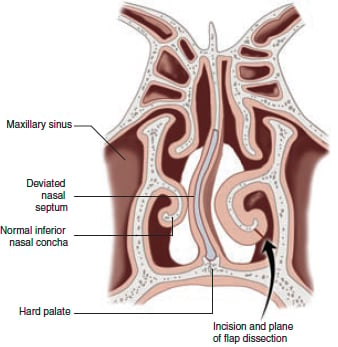
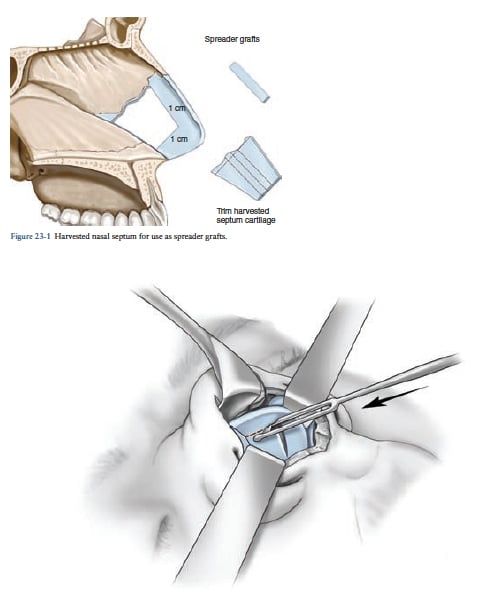
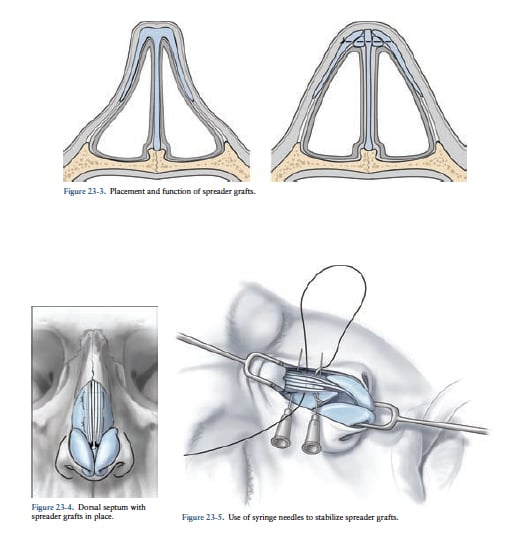
Images courtesy of Rhinoplasty. Taub PJ, Baker SB. McGraw Hill
The turbinates are paired structures located inside the nose. When they are enlarged, they can contribute to airway obstruction. Selective trimming, out fracturing, or reduction can help improve nasal breathing.
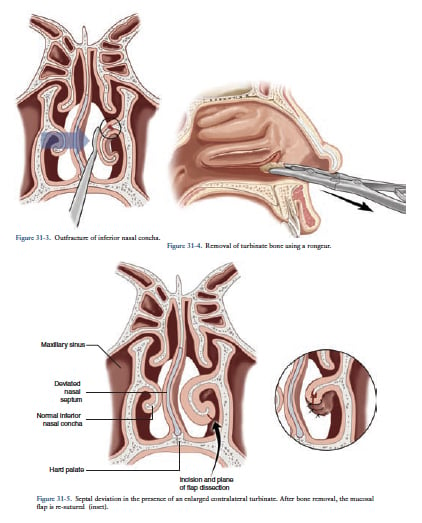
Images courtesy of Rhinoplasty. Taub PJ, Baker SB. McGraw Hill
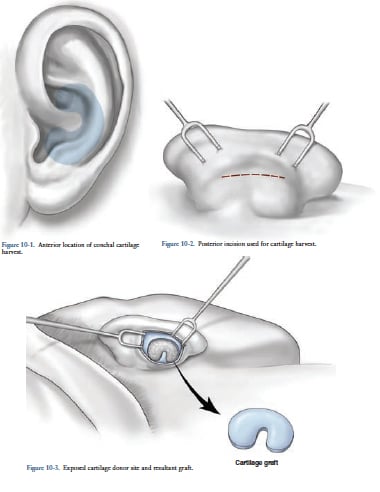
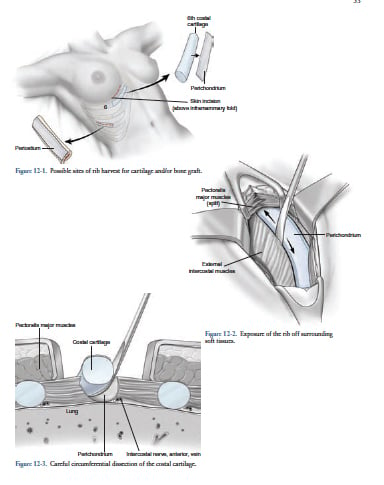
Septal cartilage is the best source of cartilage for use in rhinoplasty. It is flat, strong, and resists warping. Unfortunately, it is limited in supply. Septal cartilage is taken from inside the nose so there is no visible scar (for technique, see septoplasty above).
Ear cartilage is more abundant but is softer and does not provide sufficient rigidity for certain techniques (upper right). Ear cartilage is taken from an incision behind the ear, making this method very inconspicuous, and the shape of the ear remains unchanged. For one week after the harvest, a cushion dressing is applied to keep the skin compressed. The dressing is removed after one week.
Rib cartilage is rigid and abundant but is prone to warping. The rib is accessed through a small 3cm incision in the inframammary fold. It is visible but is small and typically heals well as the scar matures (see the following page).
Images courtesy of Rhinoplasty. Taub PJ, Baker SB. McGraw Hill
Please call 202-444-7073 to schedule your post-operative appointment or to ask questions during office hours (8:30-5:00).
Call 202-444-7243 and ask for the Plastic Surgery Resident on call.
You may shower 24 hours after surgery unless otherwise directed. In the meantime, please sponge bathe, as maintaining good hygiene is important. All the dressings should be left in place unless otherwise directed, as they will be removed at your first post-op appointment.
It is normal to have drainage from your nose, which may be tinged with blood. Usually, the drainage decreases significantly after 36 hours and becomes clearer. You can keep your nostrils clean and free of drainage using Q-tips dipped in hydrogen peroxide, but only reach inside the nose as far as the cotton tip.
You may be given a Medrol dose pack to help with swelling. Follow the printed instructions exactly and do not stop the medication abruptly. Swelling and bruising usually peak within 24–48 hours. Sleeping with your head elevated can help.
If you wear glasses, tape them to your forehead so they do not rest on your nose. Early indentations from the frames are not harmful and fade as swelling decreases. Most noticeable swelling improves within 2–3 weeks, although areas like the nasal tip may take several months to refine. It is normal for swelling to differ between sides during the first three weeks.
Breathing improvements may not be noticeable until swelling decreases, typically at 2–3 weeks. Numbness at the nasal tip is also expected and improves as nerves recover. Full return of sensation may take several months.
You have been prescribed narcotic pain medication, which can cause constipation so that an over-the-counter stool softener may help. Nausea is common after surgery, and you can take the prescribed Zofran if needed. You received IV antibiotics during the procedure, and you may also have a prescription to take at home. Be sure to complete the full course.
If you were given a Medrol dose pack for swelling, follow the printed instructions exactly. Avoid using nasal sprays such as Afrin or antihistamine sprays during your recovery.
Diet restrictions will be explained to you before you leave the hospital, as some procedures require a soft or liquid diet for a short period. A sore throat is a common side effect of general anesthesia, and over-the-counter lozenges may provide relief. Avoid alcohol while taking pain medication. A high-fiber diet, plenty of fluids, and an over-the-counter stool softener such as Pericolace can help prevent constipation while you are on pain medication.
You will likely feel drowsy after surgery, but this typically improves overnight. Light activity can be resumed as tolerated, and moving the next day often helps your energy return more quickly. Avoid heavy lifting over 10 pounds and any strenuous activity that raises your blood pressure for 2–4 weeks. Facial surgery patients should avoid contact sports for eight weeks.
Avoid blowing your nose forcefully during this period, as it can disrupt the healing process and cause bleeding. Your care team will monitor your safe activity levels as you recover.
Do not drive while taking pain medication. If your nose begins to bleed, lie down with your head elevated and apply gentle pressure with a moist washcloth for 15–20 minutes. If the bleeding does not stop, call the office during business hours; after hours, go to the emergency room.
Rhinoplasty can address both appearance and breathing concerns in one procedure. Your plan is personalized to your nasal structure and goals, allowing for natural adjustments that support long-term stability. Here are the benefits patients often experience:
Rhinoplasty is a fully personalized cosmetic procedure that addresses each patient’s needs. The cost of this plastic surgery depends on the specific technique used, the degree of correction desired, and the overall complexity required. We will analyze your nose in relation to your other facial features to develop a surgical plan and discuss the associated cost during your consultation.
Most insurance companies exclude coverage for cosmetic surgical operations or any complications that might occur from cosmetic surgery. If the procedure corrects a breathing problem or marked deformity after a nasal fracture, a portion may be covered. Please carefully review your health insurance subscriber policy.
One of the greatest compliments a surgeon receives is the ultimate respect from their peers and the entrusted care of their peer’s loved ones. Dr. Baker is proud of the fact that many of his rhinoplasty referrals come from his colleagues who refer their family and friends to him for rhinoplasty surgery. Every week Dr. Baker sees family, friends, and patients who are referred by fellow plastic surgeons; this is why Dr. Baker is referred to as “The Plastic Surgeon’s Surgeon.”
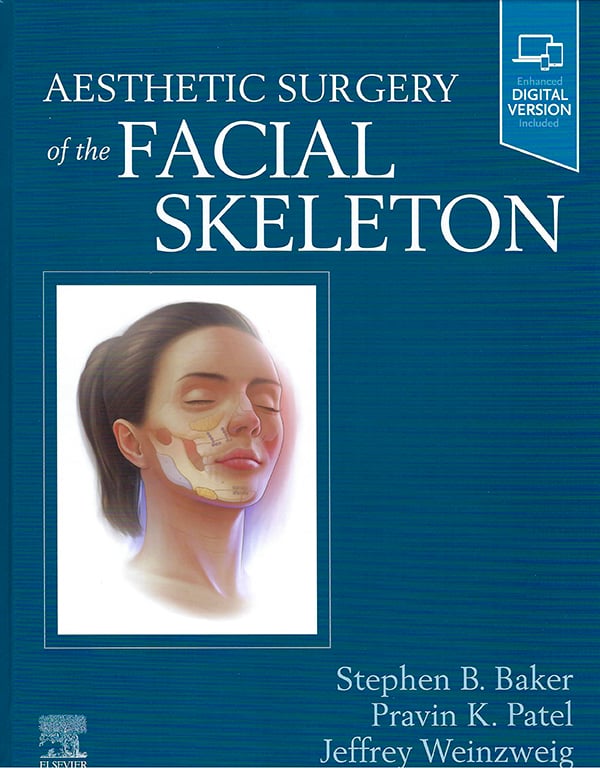
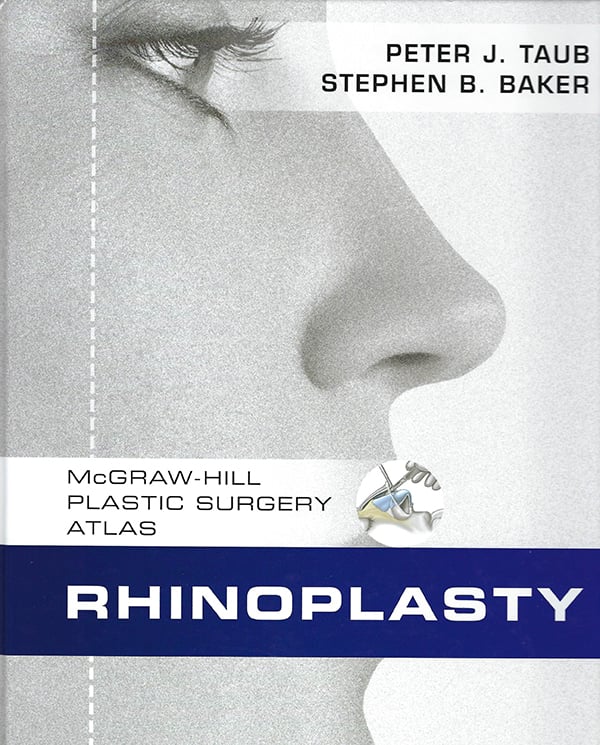
Stephen B. Baker, MD, FACS, has been a surgical professor in Plastic Surgery at Georgetown University Medical School and the MedStar Georgetown University Plastic Surgery Residency since 2001. He has trained many of the currently practicing plastic surgeons in the DMV region. Although Dr. Baker has residents and medical students learning from him, they do not perform any aspect of the rhinoplasty surgery.
Rhinoplasty is a very precise operation and every step from injecting the local anesthesia to closing the last suture has an impact on the final result. For this reason, Dr. Baker performs every step of the procedure himself, though he will have residents assisting him in surgery.
Dr. Baker’s practice serves patients from three convenient sites:
This multi-location model allows flexibility for consultation, surgery, and follow-up care, especially useful for patients in the greater Washington, D.C. region.
Dr. Baker brings a rare combination of aesthetic, reconstructive, craniofacial, and skeletal expertise to each rhinoplasty case. His background includes extensive experience with complex nasal anatomy, trauma, congenital conditions, and structural shaping. He also incorporates validated patient-reported outcome tools, including FaceQ data, to guide treatment planning.
Dr. Baker’s approach helps align surgical technique with your goals while supporting long-term structural stability and natural-looking results.
It looks very natural
“Dr. Baker, Thank you for improving my ability to breath and for fixing my nose. Now, when I look in the mirror, I see beyond my nose-I see my face. Immediately, my co-workers complemented me on the skills of my surgeon. Despite the swelling, everyone said it looks very natural and that you have done a good job. Thank you for your skills, understanding, and warm personality. I’m glad I chose you. Thanks!”
It is common to evaluate a patient for a reconstructive or functional problem who is also interested in improving their nasal proportion or appearance. If you are planning a functional or reconstructive rhinoplasty and desire additional cosmetic improvement, it is ideal to combine these procedures into a single surgery.
The recovery is shorter, and you save on OR and anesthesia fees. The septal cartilage removed for functional improvement can be used to achieve structural aesthetic improvements, reducing the need to harvest cartilage from other sites, such as the ear or rib, if a cosmetic rhinoplasty is done as a separate surgery.
The full recovery from rhinoplasty may take up to a year or more, as swelling resolves and the nose reaches its final shape. That said, Dr. Baker’s patients usually feel comfortable going out in public within 5-10 days, depending on the type of rhinoplasty and the patient's age.
Although after about one week, the patient’s family and close friends may notice subtle swelling, most others you encounter in social situations will not realize you have had recent surgery. If any bruising persists after one week, it is usually easily concealed with makeup.
Dr. Baker rarely uses nasal packing in his rhinoplasties. If packing is needed in a rare situation, he will discuss this with you before surgery so you know what to expect.
Dr. Baker seldom uses a splint in his rhinoplasties because he performs the osteotomies so the bones remain firmly in place after being set in their new positions. Rarely, for complex deformities, he will perform stepped osteotomies or other complex maneuvers that may require a splint after surgery.
If the nasal bones are repositioned, Dr. Baker requests that you refrain from any activity that may result in direct impact to the nose for eight weeks. If you are a Georgetown or professional athlete, you may resume activity earlier if you wear a protective face mask.
Dr. Baker requests that you refrain from any activity that will raise your blood pressure for two weeks after surgery. During rhinoplasty, the skin is elevated above the underlying cartilage and nasal bones. The final result of rhinoplasty depends on how the soft tissues overlay and adapt to the underlying cartilaginous and bony framework created during surgery.
If you raise your blood pressure during exercise too early, fluid can accumulate in the space between the skin and the underlying framework. It can lead to a loss of definition and compromising the final aesthetic result.
Dr. Baker only performs rhinoplasties under general anesthesia. Under sedation, the patient loses their protective cough reflex, and any blood or irrigation that accidentally touches the vocal cords will cause laryngospasm which results in a loss of the airway. This is an anesthesia emergency and a risk Dr. Baker is unwilling to take. All of his patients undergo rhinoplasty with a protected airway to optimize patient safety.
You will be given pain medication and medication for nausea to keep you comfortable after surgery. Some patients also receive an antibiotic and a Medrol dose pack if Dr. Baker feels they are needed for their recovery.
The following document is an informed consent form that has been prepared to help Dr. Baker inform you about the nature, benefits, risks, and alternatives to rhinoplasty surgery. You must read this information carefully and completely.
Rhinoplasty surgery is designed and performed to reshape or improve the function of the nose. The techniques used may produce changes in the appearance, structure, and function of the nose.
Rhinoplasty techniques may reduce or increase the size of the nose or change the shape of the various components of the nose, including, but not limited to, the dorsum, tip, and nostrils. They may also change the relationship of the nose to surrounding structures, including, but not limited to, the cheeks, the eyes, and the upper lip.
Rhinoplasty may be indicated to correct congenital birth defects, acquired deformities, traumatic injuries, and/or functional problems with breathing. The nose job techniques are customized for each patient and are not identical in all patients. These may be performed using either incisions outside the nose or inside the nose or a combination of the two.
Patients interested in undergoing a rhinoplasty procedure should have realistic expectations and not expect perfection. They should also be in good physical and emotional health. Rhinoplasty can be performed in conjunction with other surgeries.
With any type of surgery, there is inherent risk. It is always an option not to undergo rhinoplasty surgery. An individual’s choice to undergo any particular surgical procedure is based on the comparison of the risks and potential benefits.
Although the majority of patients do not experience these complications, you should discuss each of them with Dr. Baker to make sure you understand the risks, potential complications, and consequences of rhinoplasty. Infrequently, it is necessary to perform additional surgery to improve the result.
It is possible, though unusual, that you may have a problem with bleeding during or after surgery. Should postoperative bleeding occur, it may require emergency treatment or a blood transfusion to stop the bleeding. Do not take any aspirin or anti-inflammatory medications for two weeks before surgery, as this contributes to a greater risk of bleeding.
Hypertension (high blood pressure) that is not under good medical control may cause bleeding during or after surgery. Accumulations of blood under the skin may delay healing and cause scarring.
Infection following rhinoplasty is rare. Management usually involves antibiotic therapy but may also necessitate a return to the operating room for irrigation and/or debridement of infected tissue.
Although good wound healing after a surgical procedure is expected, abnormal scars may form in both the skin and deeper tissues. Scars may be unattractive and may differ in color from the surrounding skin. There is a possibility of visible suture marks. Additional treatments, including surgery, may be needed to treat scarring.
Deeper structures, such as nerves, tear ducts, blood vessels, and muscles, may be damaged during surgery. The likelihood of this occurring varies depending on the type of rhinoplasty procedure performed. Injury to deeper structures may be temporary or permanent.
Surgery may cause a hole in the nasal septum to develop. This occurrence is rare. However, if it occurs, additional surgical treatment may be necessary to repair the nasal septal defect. In some cases, it may be impossible to correct this complication.
There is the possibility of an unsatisfactory result from the rhinoplasty surgery. The surgery may result in unacceptable visible or tactile deformities, loss of function, or structural malposition. You may be disappointed that the results of rhinoplasty surgery do not meet your expectations. Additional surgery may be necessary if the desired rhinoplasty result does not persist.
There is the potential for permanent numbness within the nasal skin after rhinoplasty. The occurrence of this is not predictable. Diminished (or loss of) skin sensation in the nasal area may not totally resolve after rhinoplasty.
The human face is usually asymmetrical. There can be a variation in results from one side to the other after a rhinoplasty procedure.
Subsequent alterations in nasal appearance may occur due to aging, sun exposure, or other factors unrelated to rhinoplasty. Future surgery or other treatments may be necessary to maintain the results of a rhinoplasty operation.
Changes after a rhinoplasty or septoplasty operation may interfere with the normal passage of air through the nose.Surgical anesthesia
Both local and general anesthesia involve risk. There is the possibility of complications, injury, and even death from all forms of surgical anesthesia or sedation.

Surgery, especially longer procedures, may be associated with the formation of blood clots in the venous system. Complications may occur secondarily if blood clots (pulmonary emboli) or fat deposits (fat emboli) travel to the lungs. Pulmonary and fat emboli can be life-threatening or fatal in some circumstances.
Air travel, inactivity, and other conditions may increase the incidence of blood clots traveling to the lungs, causing a major blood clot that may result in death. It is essential to discuss with your plastic surgeon any history of blood clots or swollen legs that may contribute to this condition.
Patients who are currently smoking, use tobacco products, or nicotine products (patch, gum, or nasal spray) are at a greater risk for significant surgical complications of skin necrosis, delayed healing, and additional scarring. Individuals exposed to second-hand smoke are also at potential risk for similar complications attributable to nicotine exposure.
Additionally, smoking may have a significant adverse effect on anesthesia and recovery from anesthesia, with coughing and possibly increased bleeding. It is essential to refrain from smoking at least six weeks before surgery and until your physician states it is safe to return if desired.
It is important to inform your plastic surgeon if you use birth control pills or estrogen replacement, or if you believe you may be pregnant. Many medications, including antibiotics, may neutralize the preventive effect of birth control pills, allowing for conception and pregnancy.
All instructions given by Dr. Baker should be carefully followed to maximize the success of your outcome. It is important that the surgical incisions are not subjected to excessive force, swelling, abrasion, or motion during the time of healing. Physical activity needs to be restricted. Surgery involves clotting of blood vessels, and increased activity of any kind may open these vessels, leading to bleeding or hematoma.
Increased activity that raises your pulse or heart rate may cause additional bruising, swelling, and the need for a return to surgery and control of bleeding. It is wise to refrain from physical exertion (including sexual activity) until Dr. Baker determines it is safe.
Protective dressings and drains should not be removed unless instructed by your plastic surgeon. Successful postoperative function depends on both surgery and subsequent care. It is important that you participate in follow-up care, return for aftercare, and promote your recovery after surgery.
Your ideal nasal shape starts with a conversation. If you’re interested in learning more about rhinoplasty, contact Stephen B. Baker MD, FACS Plastic Surgery DC and McLean VA in Washington, D.C., to schedule your informative consultation today. Our skilled team will help guide you throughout the entire surgical process and answer any of the questions you have along the way. Call us at 202-444-7073 or fill out the form to book your appointment.
Your first rhinoplasty didn’t go as planned. Your nose looks unnatural, or you can’t breathe ... You may notice fine lines around your eyes or a gradual volume loss in your ... Some wounds heal more easily than others. If a wound continues to linger, becomes more ...


As Featured In